Inspection and Verification
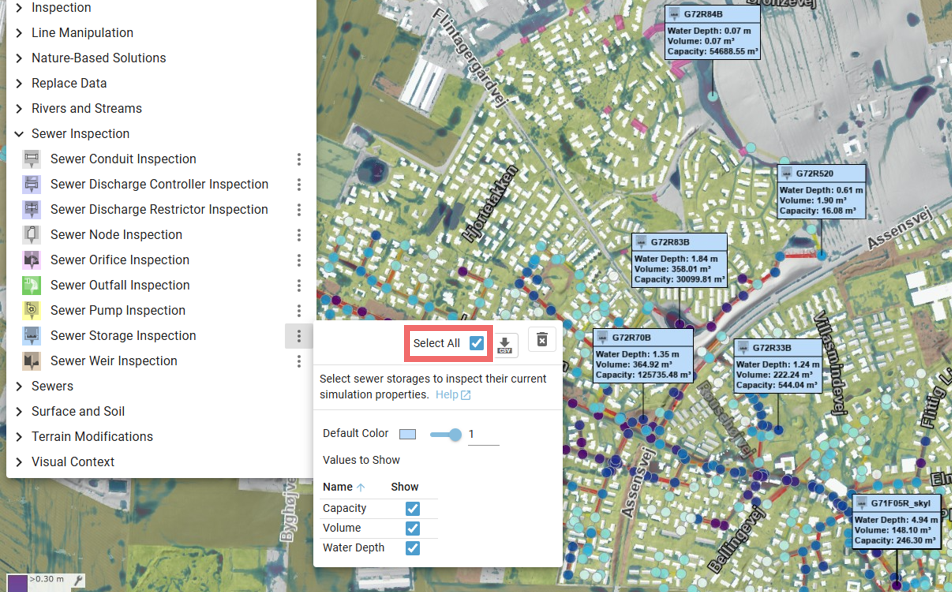
The dedicated sewer inspection tools offer valuable insights into the simulation. Beyond inspecting individual sewer elements, the "Select All" feature, available for each sewer inspection action type, allows the user to select all the elements of a specific type at once:
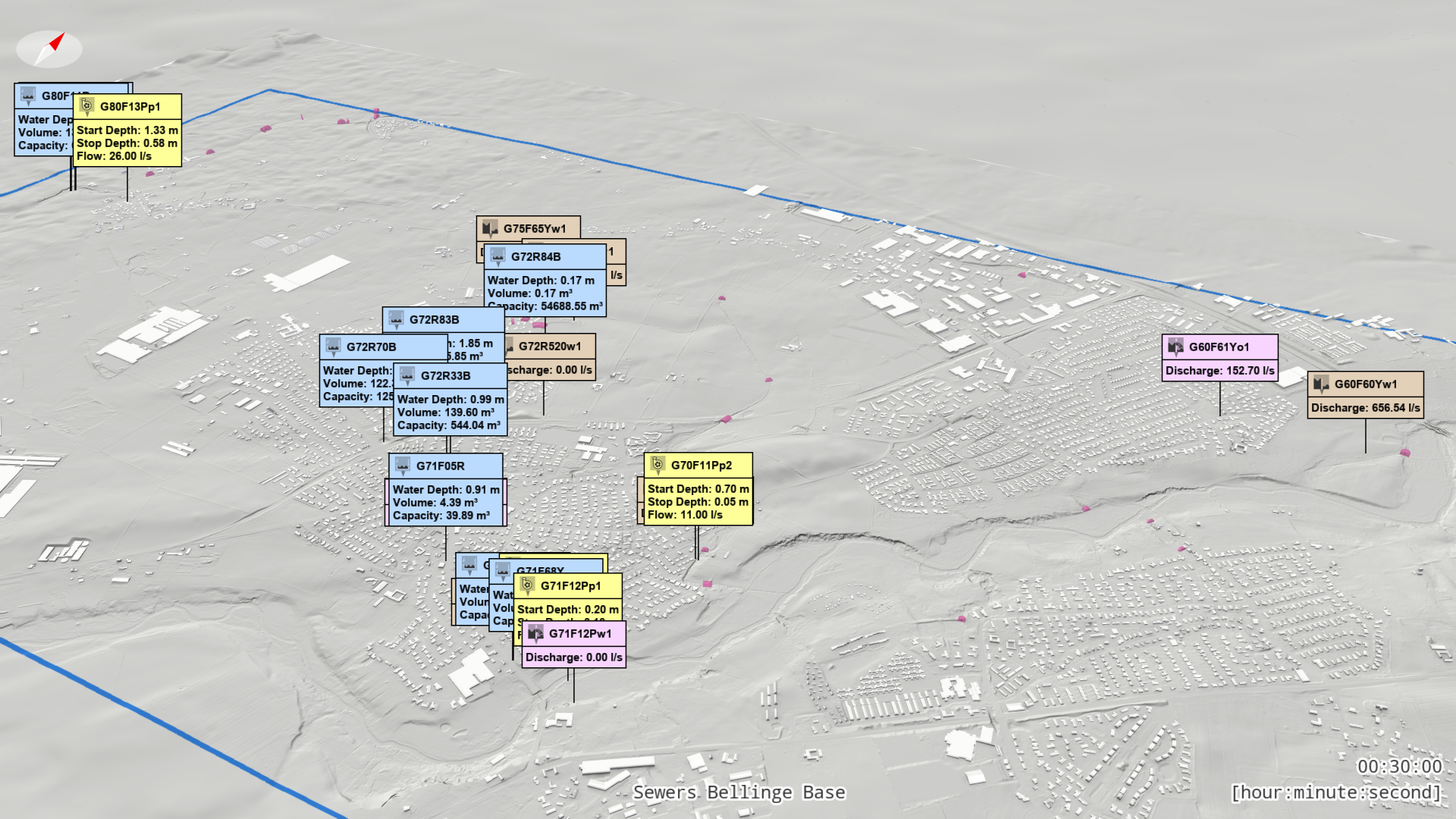
This feature is especially useful for finding all the structures at once and investigating them:
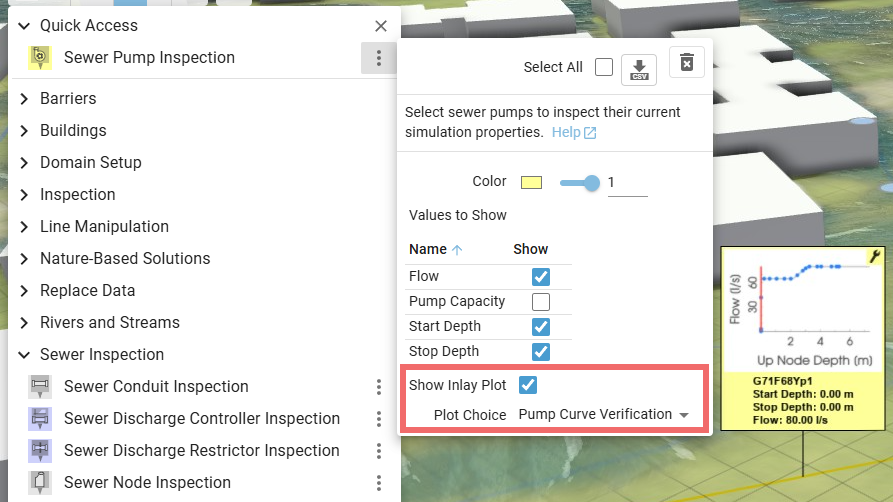
Some sewer inspection tools include verification features. For instance, Sewer Pump Inspection offers an inlay plot option in the inspection labels. When "Pump Curve Verification" is selected under Plot Choice, the corresponding pump curve is shown as a gray line, while the simulated operating points appear as blue dots. Ideally, the blue dots should follow the gray line closely as possible. If applicable, the pump's startup and shutoff depths are indicated by red vertical lines:
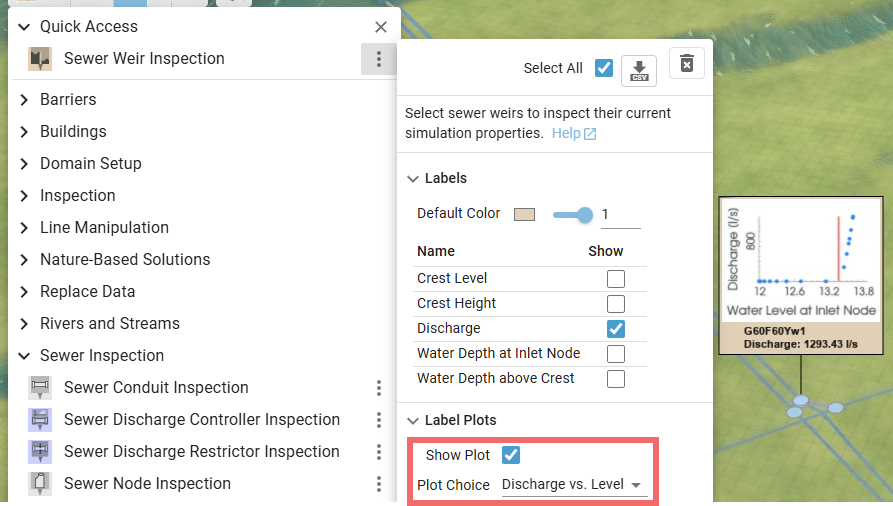
In Sewer Weir Inspection, the inlay plot can be configured to display discharge versus water level, which serves as a verification tool. Discharge should begin as soon as the water level reaches the weir crest level, marked by a red vertical line. Simulated operating points are shown as blue dots:
In Sewer Discharge Controller Inspection, the inlay verification plot shows discharge versus the relevant inlet and outlet conditions. The defined rating curve appears in gray, while simulated operating points are displayed as blue dots, similar to Sewer Pump Inspection:
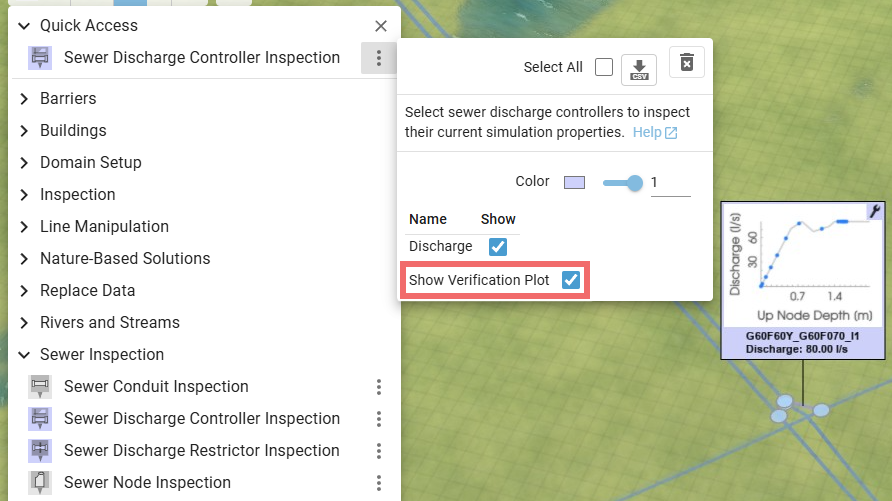
Hint: The sewer network simulation in SWMM is a complex dynamic system that can sometimes lack numerical stability. As a result, the verification tools mentioned above may not always show a perfect match between defined curves and simulated operating points.
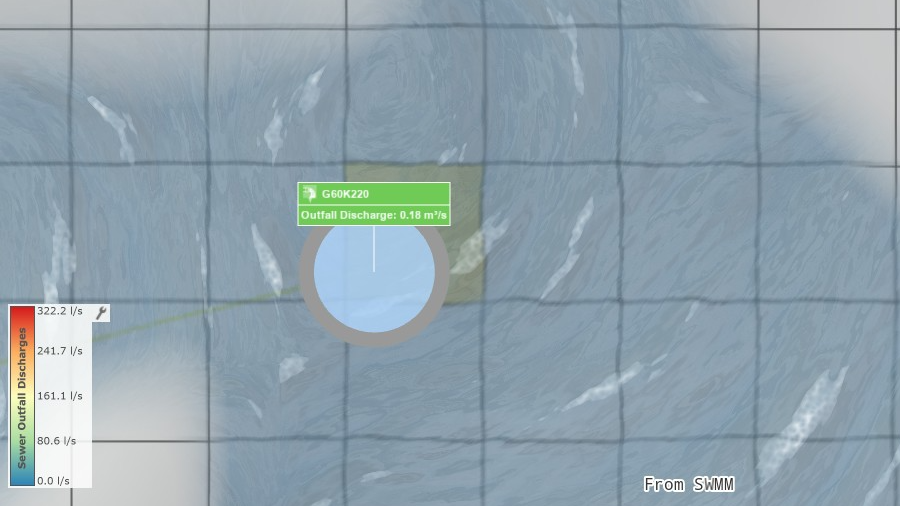
Customized visualizations, configurable through the Visualization Settings Panel, can support further verification. For instance, node inflows or outfall discharges can be visualized directly on top of the terrain:
3D visualizations of the sewer network can also assist in verifying flow behavior. For example, they allow you to observe when discharge through a weir begins as water reaches the crest, or how rising water levels at a junction eventually cause an overflow.